

Indie filmmakers have the opportunity not to follow the traditional form and format of typical Hollywood films. We are free to make an artistic statement without the burden of making a profitable film: Mark Diamond
Can you tell us about the inspiration behind “Enemy Heroes”? What themes did you want to explore?
It explores the universal struggle to retain humanity amid chaos. It is a struggle that unites us across nations, beliefs, and generations. Sometimes the conflict within us is greater than the conflict outside us – even in times of war.
What specific elements of “Enemy Heroes” do you think contribute to its recognition at the festival?
Enemy Heroes takes the audience into a world where fear and courage are interwoven with the agonizing choices our protagonists are forced to make.
Did you have a specific target audience in mind while creating “Enemy Heroes”?
Yes – I was targeting an audience that was willing to be introspective and consider how they would have responded. Enemy Heroes encourages the audience not to let resentment and anger seduce us into a polarized viewpoint. Given the state of my country and the world today, this message could not be more timely.
As this is your first film, what were some of the biggest challenges you faced during the production?
Getting to the production stage was a long process, over 25 years. It was a matter of not losing the ultimate goal and meeting the right people who would help bring my vision to life.
How did you assemble your cast?
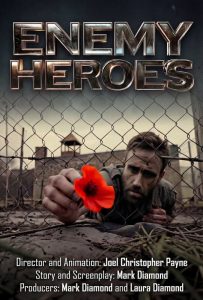
The film is AI. However, after “living with” the characters for many years, I had a vision of how they looked and spoke.
What was the most rewarding aspect of making your first film?
Seeing my internal visions come to life. It was like meeting an old friend.
Could you share your creative process when developing the screenplay for “Enemy Heroes”?
With a passion for history and over 40 years as a clinical psychologist, I’ve devoted my life to understanding the human spirit — our resilience, our capacity for compassion, and the choices we make when faced with the unthinkable. This film is a continuation of that work, an invitation for audiences to look deeper into what defines us as human beings.
How did you approach the film’s visual style and cinematography?
There was ongoing communication with the art director to establish this period piece. The primary approach to the visual style is that I wanted the film to be a reaction piece, not an action piece.
What role does music play in “Enemy Heroes,” and how did you select the soundtrack?
The music needed to be period correct and reflect the emotional aspects of the various scenes.
Winning the Best Experimental Film Award at the Stockholm City Film Festival is a significant achievement. How did you feel when you received the award?
Being acknowledged is very gratifying.
In your opinion, how does “Enemy Heroes” fit within the indie film landscape today?
Indie filmmakers have the opportunity not to follow the traditional form and format of typical Hollywood films. We are free to make an artistic statement without the burden of making a profitable film.
Have you drawn inspiration from other filmmakers or films in crafting your own style?
I appreciate films that allow me to reflect on myself and make me a better person.
What advice would you give to aspiring filmmakers who wish to create their first film?
Have something worth saying. Making a film is not the same as making a meaningful statement.
Are there any particular scenes in “Enemy Heroes” that hold special significance for you?
I find particular significance in the scene where our Polish soldiers are sworn into the German Army. There was no talking, just the increased intensity on the characters’ faces. The audience is left to fill in the character’s internal dialogue.
What is your future after “Enemy Heroes”? Are there any new projects on the horizon?
I am planning to expand Enemy Heroes into a feature-length film. This short serves as a powerful stepping stone — a cinematic call to question the narratives of war and to see through the eyes of those who lived it on the other side.
